I Audited 27 Creative Teams. Here’s the One Bottleneck They All Had
A few months ago, I started interviewing and auditing creative, packaging, and brand production teams — 27 in total.
Different industries.
Different team sizes.
Different tools.
Different processes.
And yet… after the third audit, the fifth, the tenth — the pattern became impossible to ignore.
Every single team was slowed down by the same bottleneck.
Not talent.
Not lack of ideas.
Not missing skills.
Not “too many projects.”
It was something much quieter — the kind of problem that hides inside normal workdays until you zoom out far enough to see it clearly.
The bottleneck that steals hours, but never shows up in reports
Here’s what I kept seeing:
- timelines scattered across emails and spreadsheets
- assets stored “everywhere and nowhere”
- artwork versions multiplying without logic
- approvals stuck with the same people
- compliance checks done at the very end
- feedback looping endlessly with no tracker
Teams assumed it was just part of the job.
But the numbers told a different story.
On average, 20–40% of time was lost not on creative work, but on navigating the mess around it.
And this bottleneck was identical across every team, regardless of industry.
The teams that escaped the bottleneck all did one thing
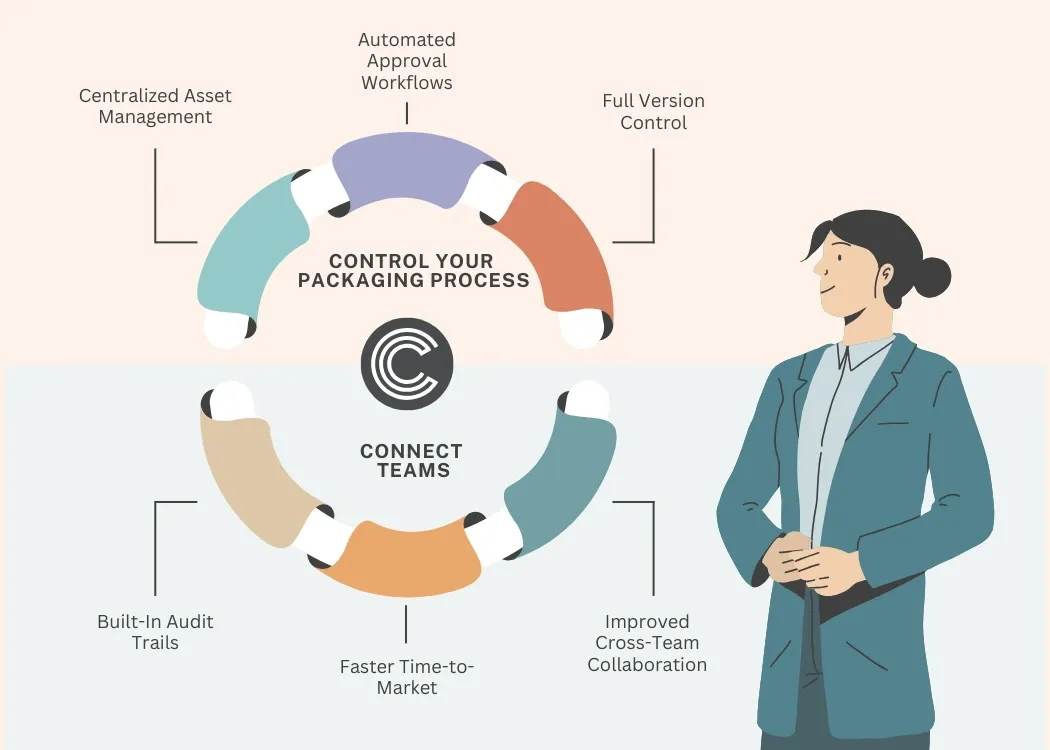
They stopped trying to “manage the chaos” and instead built a single operational backbone for their creative work.
Not another spreadsheet.
Not a shared drive.
Not a Slack channel.
A real system.
You’d be surprised how quickly things change when:
- tasks and timelines live in one organized workspace
→ like what teams set up with a dedicated design project management hub - assets and references are searchable (and never lost again)
→ using structured digital asset management - artwork versions and history are tracked automatically
→ inside specialized artwork management software - approvals finally move forward on their own
→ thanks to modern artwork approval workflows - compliance steps are integrated into the workflow, not added last-minute
→ with smart brand compliance rules
Once these foundations are in place, the bottleneck — the invisible one — disappears almost overnight.
Here’s the most interesting part
Not a single one of the 27 teams told me:
“We need more designers.”
“We need more hours.”
“We need more meetings.”
But all of them said, in some form:
“We lose too much time trying to find things, align things, or fix things.”
And that’s the bottleneck.
Not bandwidth.
Not skill.
Not creativity.
It’s the infrastructure around the work.
Once you fix that, everything else accelerates.
